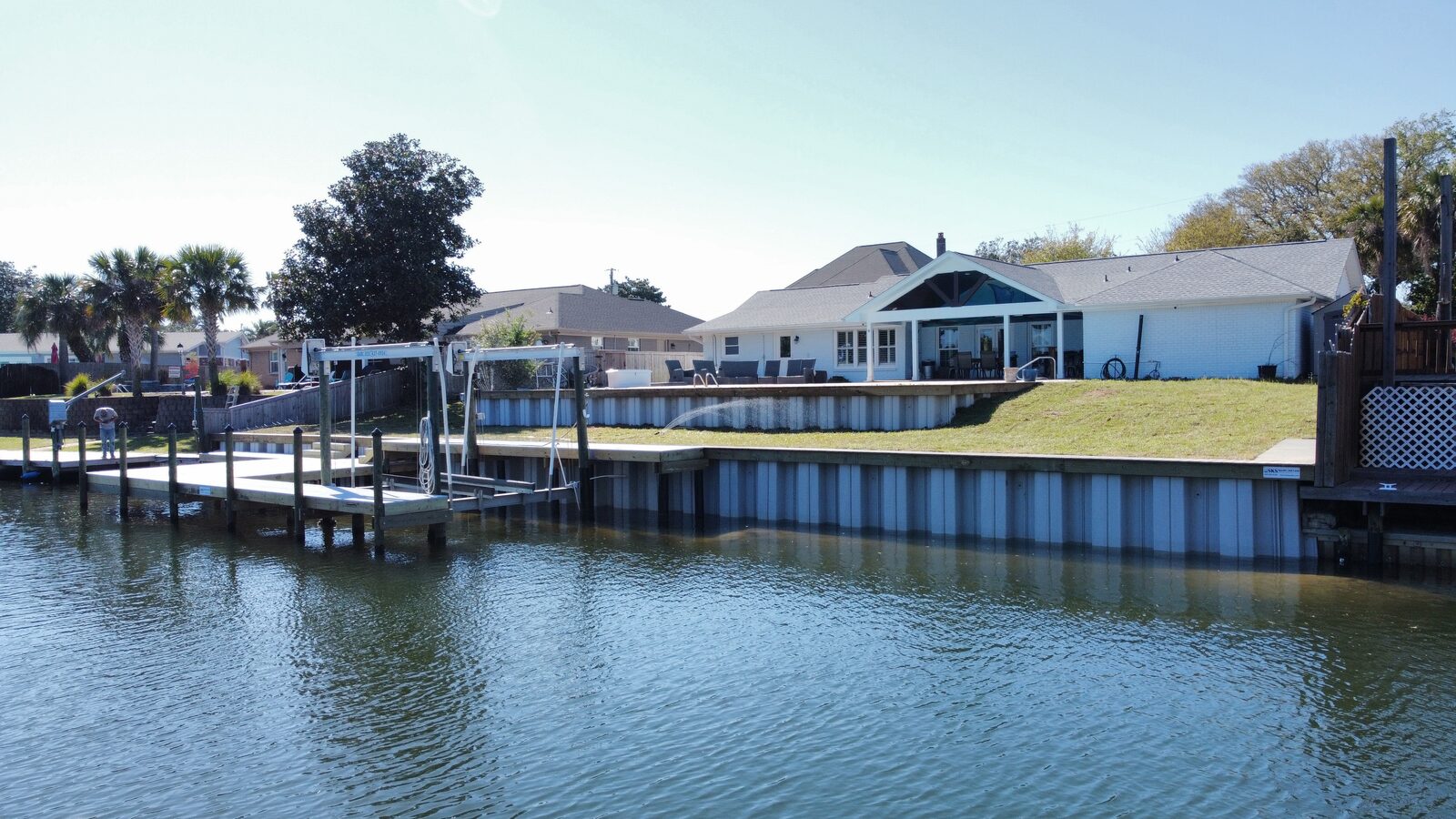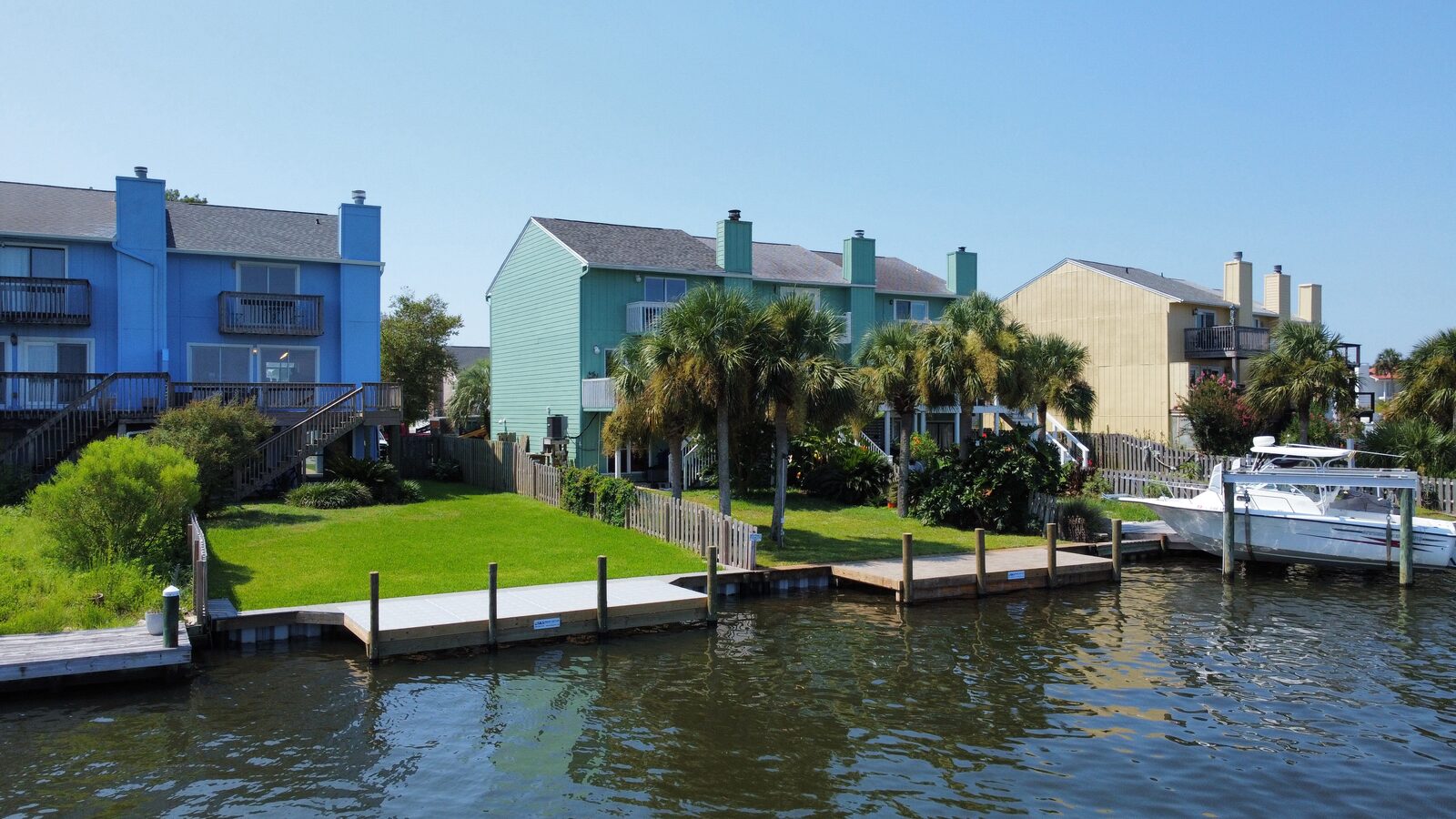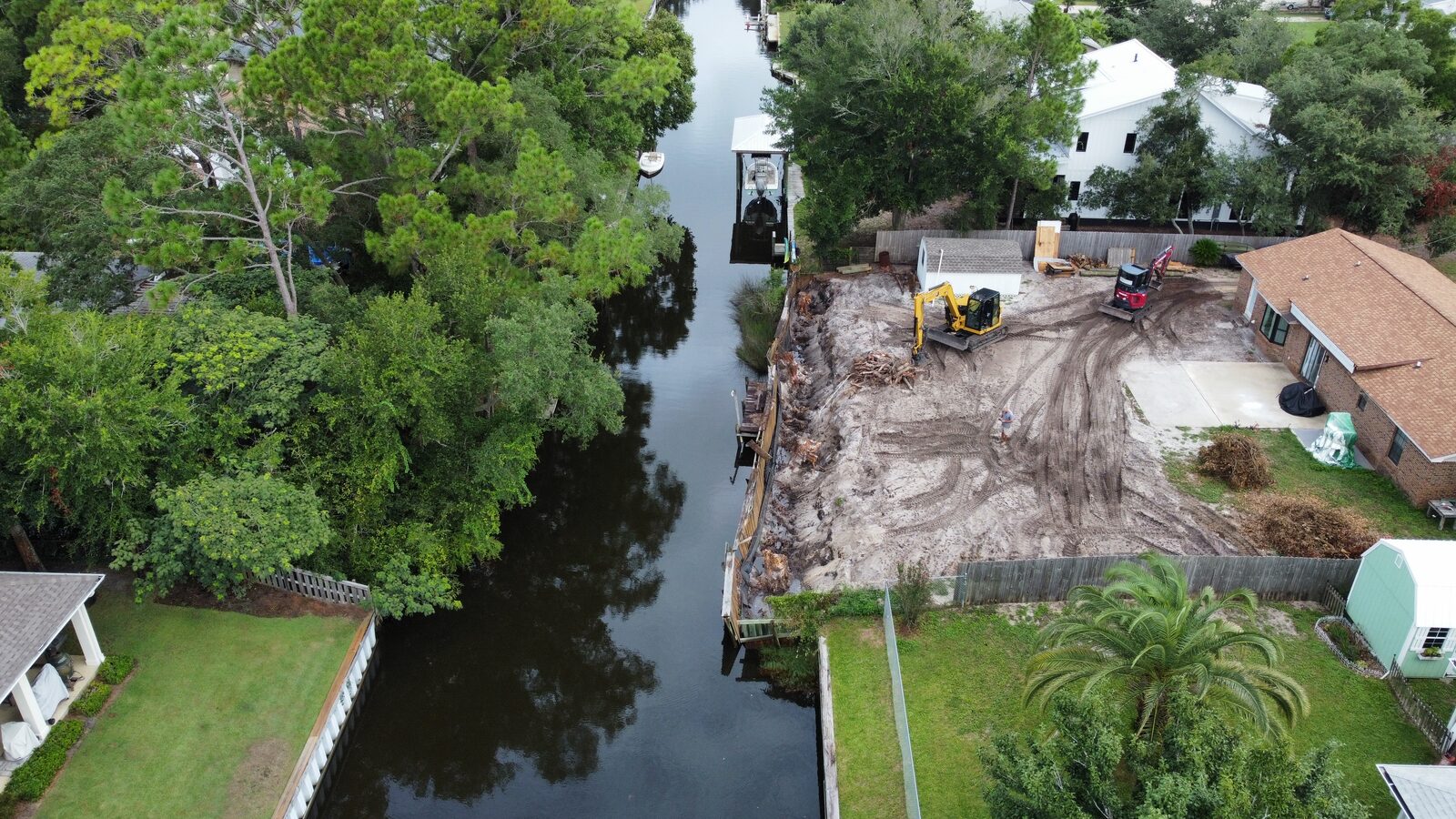
The five warning signs
Walk the wall after a hard rain and a high tide. That is when everything shows.
- Soft spots, dips or small sinkholes in the yard behind the wall
- Cap sections tipping seaward or joints opening up
- Soil weeping out through panel seams or tieback penetrations
- Rust staining and spalling on concrete caps and beams
- Fence posts, pavers or decking pulling away from the wall line
Why the yard disappears first
Nearly every failure starts as a hidden loss of backfill. Water pushes through a small gap, carries sand out with it on the tide, and leaves a void. The wall still looks fine until the void collapses.
What repair looks like at each stage
Caught early, most walls need joint sealing, filter fabric and a grout or void fill. Caught late, you are looking at new tiebacks, cap replacement, or a full rebuild with the shoreline reopened.
Early: seal and stabilize
Joint repair, geotextile behind the panels, void grouting and drainage correction.
Mid: structural reinforcement
New tiebacks and deadmen, cap repair, selective panel replacement.
Late: rebuild
Demolition, new pilings and panels, fresh backfill and compaction, restored cap.
The cost of waiting
Every season a void grows, the repair scope grows with it. A seal-and-fill visit is a fraction of a rebuild. Get eyes on it while it is still a maintenance item.
Related service
Vinyl and concrete seawalls, riprap revetment and bank restoration.
Seawalls & Shoreline Stabilization