
What Does a Seawall Cost — and Should You Repair or Replace?
Seawalls are priced by the running foot, but the number behind that foot depends on wall height, soil, exposure and whether the existing wall can be saved. Repairing a sound wall is a fraction of replacing it — the trick is knowing which you have.
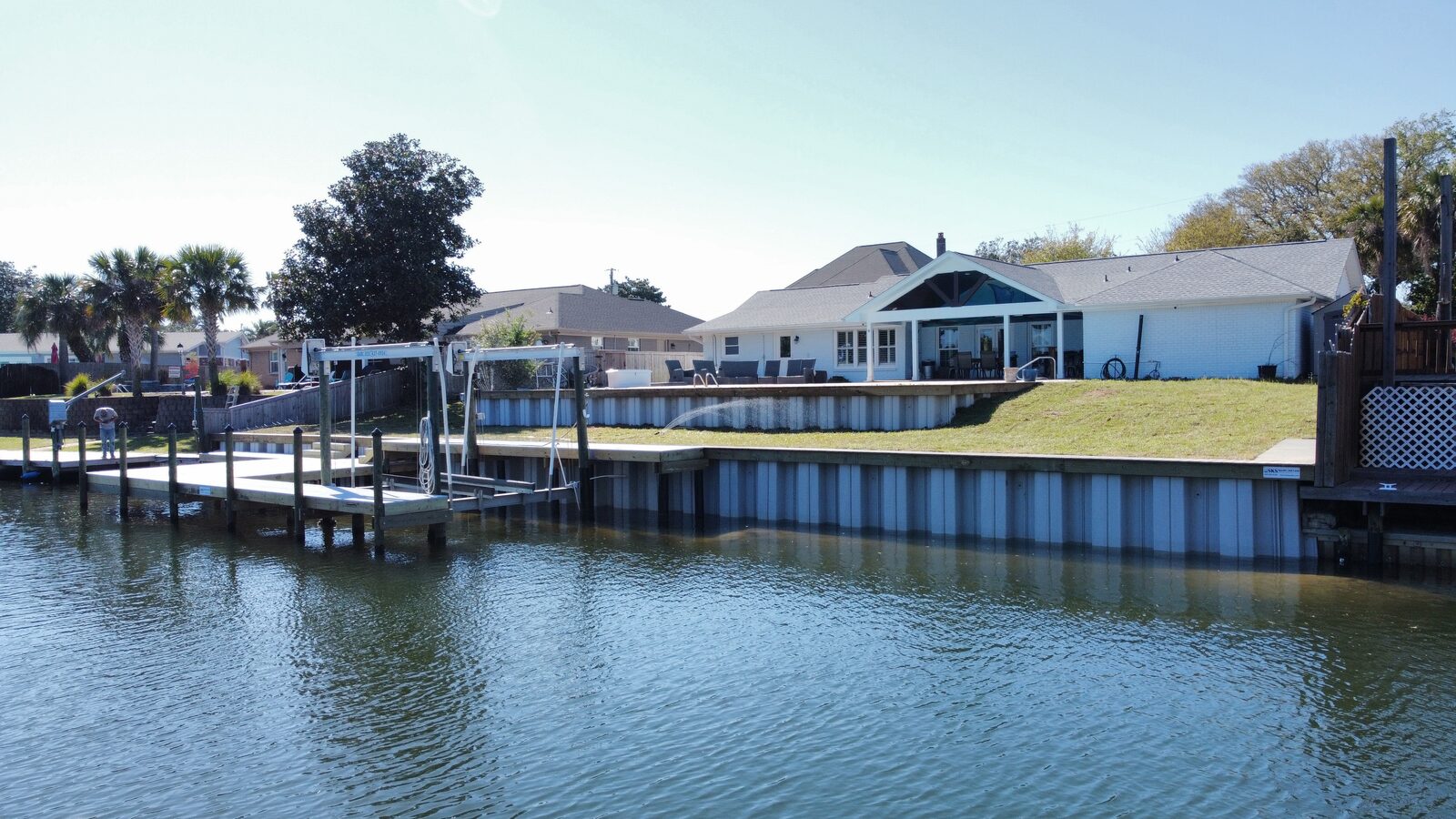
Typical price ranges
Ranges pending. We publish real numbers only — these rows are waiting on confirmed pricing from Scott, so they read “Range pending” instead of showing made-up figures. Send the real ranges over and they go straight in.
| Scope | Typical range | What it covers |
|---|---|---|
| Seawall cap repair | Range pending | Cracked or spalling cap, wall itself sound. |
| Panel replacement, per section | Range pending | Localized failure in an otherwise good wall. |
| Tie-back installation | Range pending | Fixes a leaning wall without full replacement. |
| New vinyl seawall, per running foot | Range pending | Sheet pile, cap, backfill and drainage. |
| Riprap revetment, per running foot | Range pending | Often cheaper than a wall on gentler banks. |
What moves the price
Wall height and embedment
The wall you see is roughly half the story. Higher exposed height needs deeper embedment and heavier sheet, which drives the per-foot number.
Soil and drainage
Sandy, saturated soils need proper filter fabric and weep drainage. Most walls that fail early failed at drainage, not at the panels.
Wave exposure
An open-bay or high-wake shoreline needs more wall than a protected bayou at the same height.
Demolition and access
Removing an old failed wall, and getting equipment to it, is a real line item — sometimes the largest one.
Restoration
Grading, backfill and re-sodding so the yard looks finished rather than excavated.
Repair or replace: how to tell
A wall that is straight and tight, with a damaged cap or a couple of bad panels, is a repair. A wall that leans toward the water, shows soil sinkholes behind it, has gaps at the joints, or has separated from its cap has lost its structural system — that is a replacement or, at minimum, tie-backs.
Seawall vs. riprap
Riprap absorbs wave energy and is usually cheaper per foot on gentler banks, but it eats yard and does not give you a hard vertical edge. A seawall maximizes usable yard and holds a clean line, at a higher price. We recommend based on your bank slope and exposure, not on which one we would rather build.
The cost of waiting
Erosion behind a failing wall is the expensive part. Every season a leaning wall sits, more backfill washes out — so the eventual job includes replacing soil, sod and sometimes hardscape that was fine when the crack first appeared.
Common questions
How long does a vinyl seawall last?
Vinyl sheet pile does not rot or corrode, so lifespan comes down to installation depth, tie-backs and drainage. Properly installed walls routinely outlast the concrete caps on top of them.
Can a leaning seawall be saved?
Often, with tie-backs installed to anchor it back into the bank. Whether that is the right call depends on how far it has moved and what is happening to the soil behind it.
Do seawalls need a permit?
Generally yes, and requirements vary by waterway and county. We handle the submittals and agency coordination.
Get a real price for your property
Free on-site estimates from Gulfport, Mississippi to Tallahassee, Florida.
Keep reading
Ready to talk about your waterfront?
Free on-site estimates from Gulfport to Tallahassee. We walk the property, take measurements and give you a straight number.